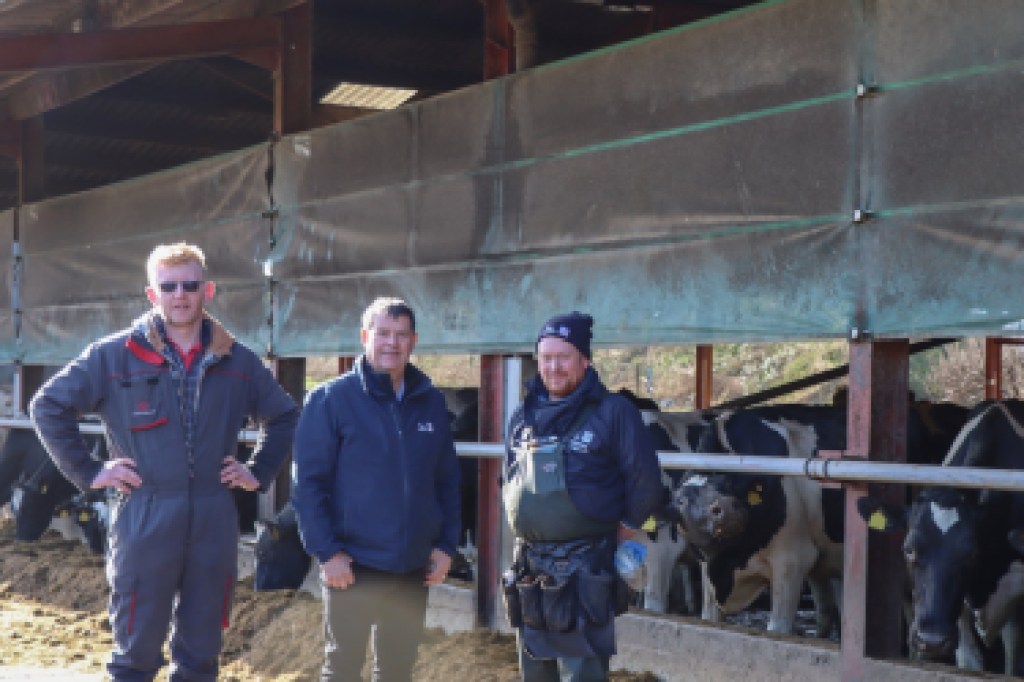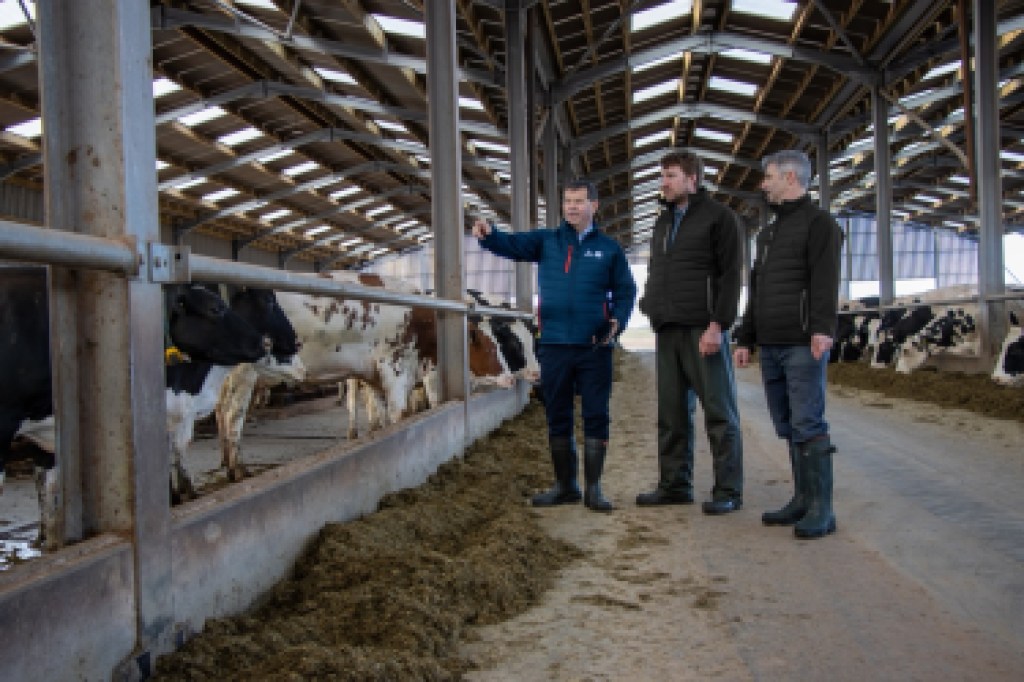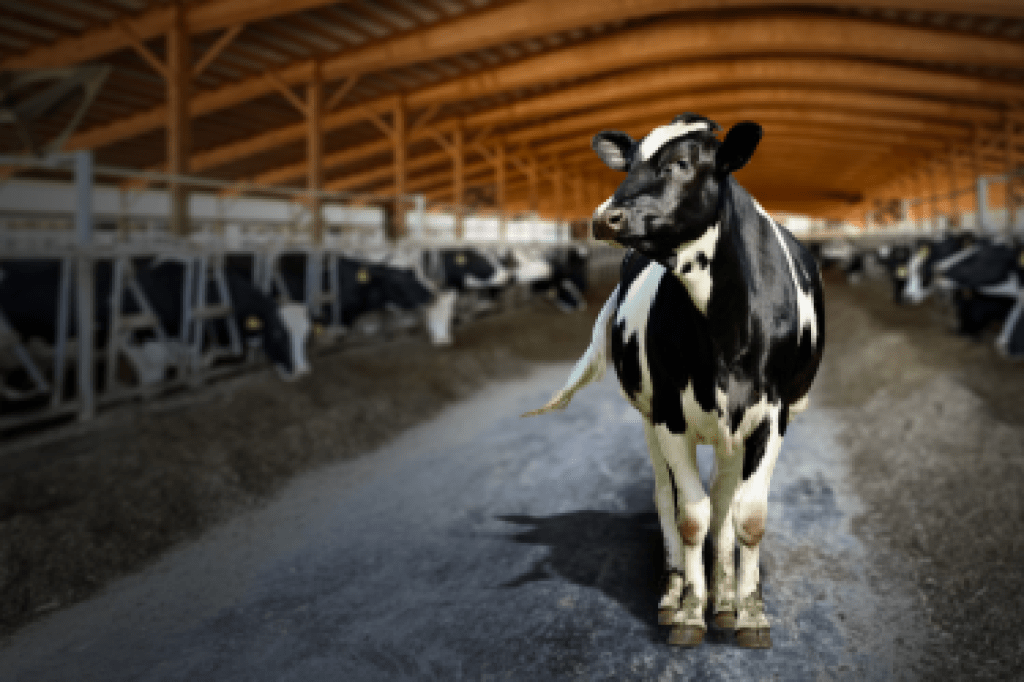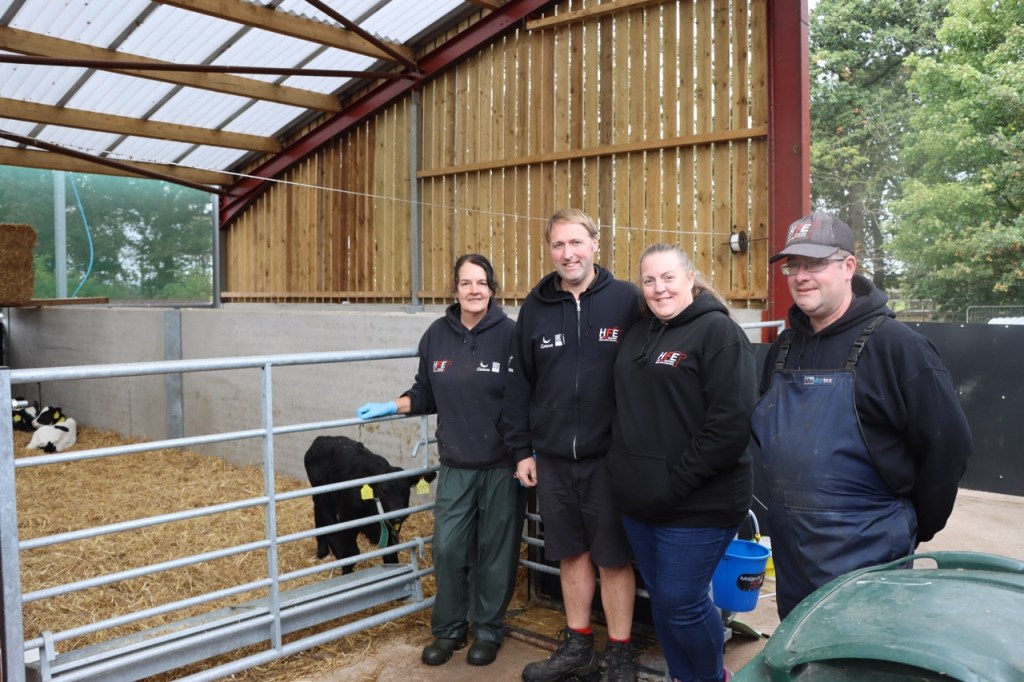
Jones HFE Agriculture, Hill Farm, is a sixth-generation, family-run dairy farm based near Chester. The business is managed by Adrian Jones, alongside his brother Tristan, parents David and Frances and Adrians wife Joanne. Together, they continue the family’s long-standing farming legacy while embracing innovation to drive efficiency and herd performance.
A focus on targeted, sexed breeding of both dairy replacements and beef calves, alongside tailored nutrition, is helping the family maximise returns from the dairy herd while continuing to improve herd performance and longevity.
Herd Manager James Lloyd, Youngstock Manager Liz Smith and Herdsperson Dan Halliday are also integral members of the team who help the family push the boundaries of herd progression, whether that’s production, reproduction, health, or genetics, a field James is particularly passionate about. They are supported by an exceptional team of milkers, assistants and tractor drivers, who all contribute to the farm’s success.
Established in the 18th century, Hill Farm has been home to the family for generations, with Adrian and Tristan having farmed there for more than 23 years.
The farm spans 1,200 acres and supplies milk under a Müller/Tesco contract. The herd’s results are a testament to the team’s dedication, with cows averaging 13,000 litres, 4.2% fat, and 3.21% protein, alongside an impressively low bactoscan of 12 and somatic cell count of 70.
The herd’s performance reflects the team’s long-term focus on consistency, efficiency and cow longevity, with breeding and management decisions carefully aligned to the farm’s future goals.
Breeding and management
The family run a closed herd, focusing on home-bred replacements after previously expanding through buying in additional cows, helping to ensure long-term herd stability and consistency. All heifer replacements are reared at their dedicated youngstock unit, while beef calves, a mix of Angus and British Blue, are sold to Meadow Quality.
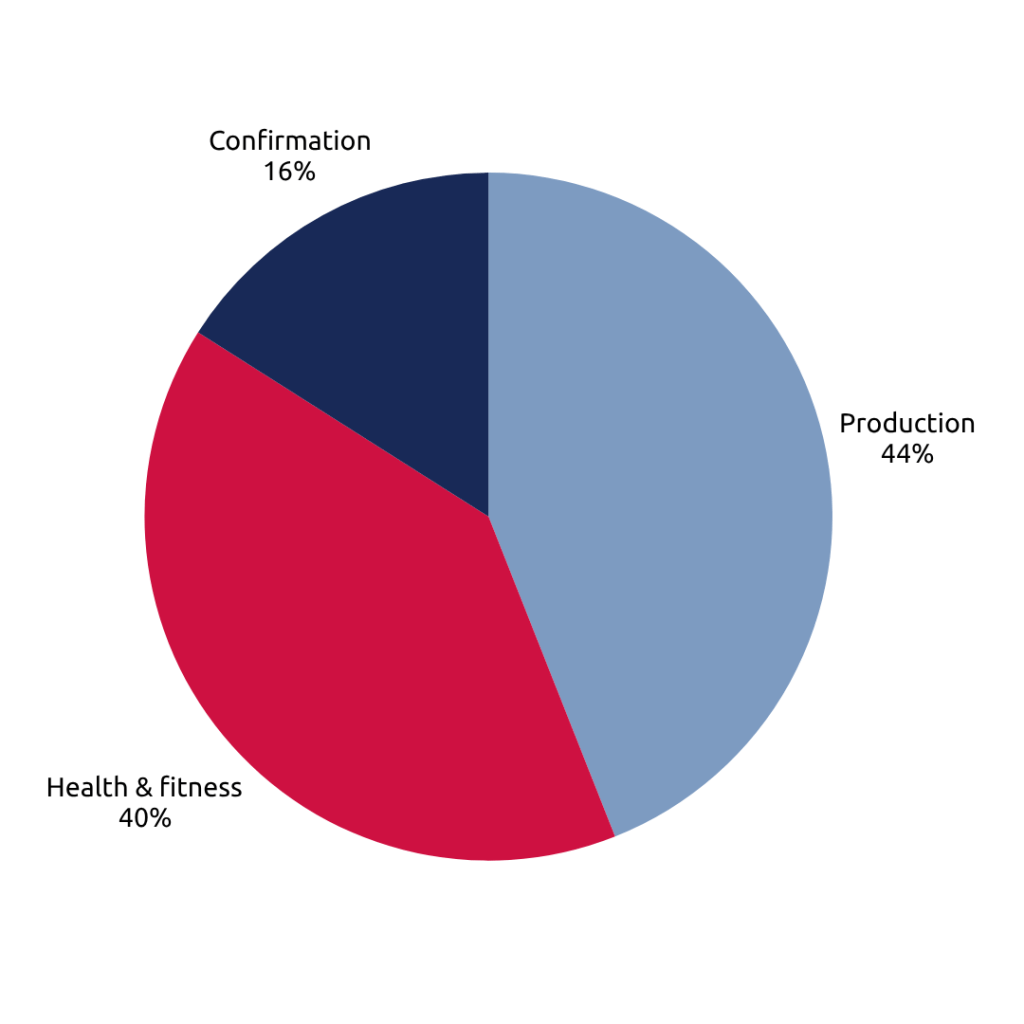
Breeding decisions are guided by a custom index developed specifically to meet the herd’s goals, with priorities split for 44% production, 40% health and fitness, and 16% conformation while avoiding undesirable characteristics such as excessive stature.
The index is designed to balance production, health and manageability traits, helping create cows that perform consistently within the farm’s system while remaining easy to manage.
“We know what works for our system,” he says. “It’s about finding that balance between performance, health, and traits that make the cows easier to manage.” Adrian explained.
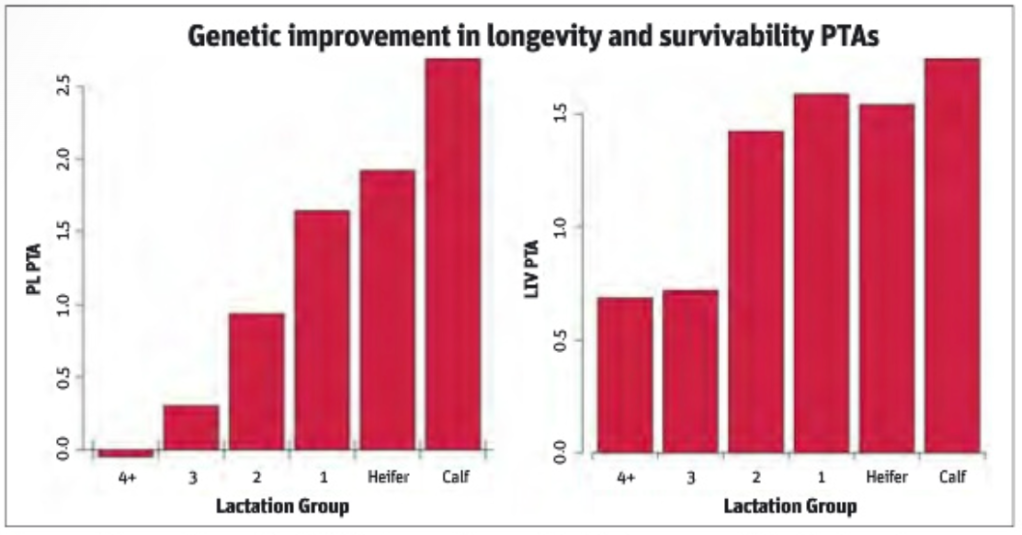
Over time, this targeted breeding strategy has resulted in younger animals entering the herd ranking significantly higher within the custom index, while longevity and survivability traits have also improved dramatically.
A longstanding partnership with Genus ABS

The family has partnered with Genus ABS for more than 20 years, making full use of the Reproductive Management System (RMS) throughout that time. This long-term partnership has been instrumental in helping them achieve consistent fertility performance and maintain strong results year after year.
Around eight years ago, Adrian and his team began using Sexcel, Genus ABS’s sexed semen, the results have been impressive, both in conception rates and gender accuracy.
“I find Sexcel on par, if not better, than conventional semen for conception rates,” says Adrian. “The gender skew results have been phenomenal – it’s very rare we get a male dairy calf.”
The results speak for themselves: over the past 12 months, the herd has achieved an average 45% conception rate with Sexcel sexed semen and 41% with conventional beef semen.
This level of predictability and confidence in conception has enabled the Jones family to make breeding decisions with greater precision and efficiency, helping to strengthen the herd’s long-term genetic progress.
Driving genetic progress
Seeking to refine herd uniformity after expanding with purchased cows, Adrian introduced GENEadvance to their breeding programme around four years ago, a move that has transformed how they manage genetic selection on the farm.
Through genomic testing and data-driven insights, GENEadvance provides a deeper understanding of each animal’s genetic potential. Using a combination of GMS and GENEadvance, the team work with their Genetic Service Specialist to rank cows based on a custom index. This determines which animals are bred to Sexcel Dairy for heifer replacements and which receive Sexcel Male Beef or conventional semen.
Previously, Genus manually scored animals to decide cows which should breed replacements and which should go to beef. Now, GENEadvance uses data-driven insights to guide every decision with confidence and accuracy.
“GENEadvance takes the guesswork out of it,” says Adrian. “We let the data decide which animals breed our replacements and which go to beef. We’d recommend GENEadvance to anyone.”
Even after four years of using the programme, the team are still occasionally surprised by which animals are selected for dairy and beef breeding, but they trust the data, which has become an invaluable part of the farm’s progress.
“Before GENEadvance, decisions were based on visual assessment, but it’s incredible to see how the data sometimes challenges what you think you know. It’s helped us create a much more uniform, consistent herd.”
Next steps in their breeding strategy
Building on their success with Sexcel dairy semen, the family recently introduced Sexcel male beef semen, focusing on sexed British Blue to further enhance the value of their calf crop.
“We’re using sexed British Blue now and are happy with the results so far,” Adrian says. “We’ve had no issues with calving ease with the blue’s, and the added value of male calves going to Meadow Quality was a key driver for making this decision.”
This approach allows the farm to maximise returns from every calf born while maintaining simplicity in herd management and rearing.
Of course, nutrition is an important pillar to help the cows reach their genetic potential, and the family have worked with independent nutritionist, Pete Davies, for more than 18 years. A central focus is the ability to quickly identify and correct nutritional or metabolic dips immediately after calving, he says. Strong transition management underpins long-term performance across the lactation, and quarterly review meetings involve the farm team, Sandstone Vets, Genus ABS breeding adviser, and Pete.
“The aim is to help cows reach their genetic potential, with peak yield targeted at around 20kg in milk”. Rations are based on high-quality maize and grass silage. When forage is tight, he uses alternative energy/protein sources, including high-starch feeds like bread, depending on availability.
For the past two years, Pete has supplemented the diet with Zinpro IsoFerm to support fibre digestion, microbial activity and overall feed efficiency, with consistently strong results. “The target starch level is about 25%,” he says. “Over the past 12 months the average has been c.23%, contributing to a slight dip in performance. The ability to pinpoint this so precisely reflects the herd’s strong monitoring and data interpretation processes.”
Join the farms building stronger, more consistent herds through smarter breeding.
Speak to your local breeding advisor today via the form below.