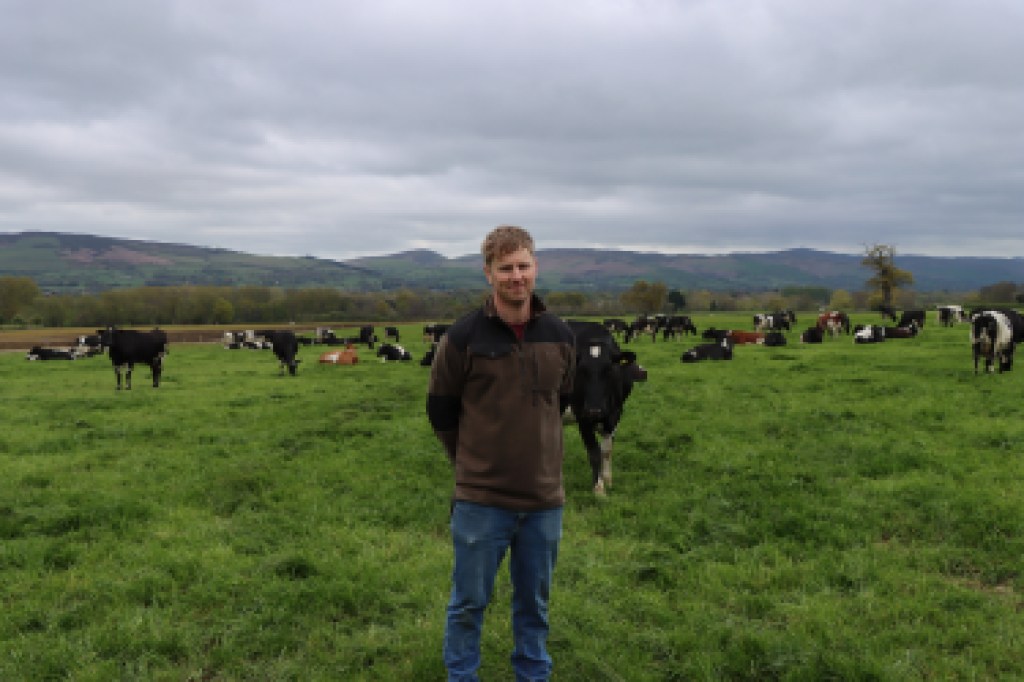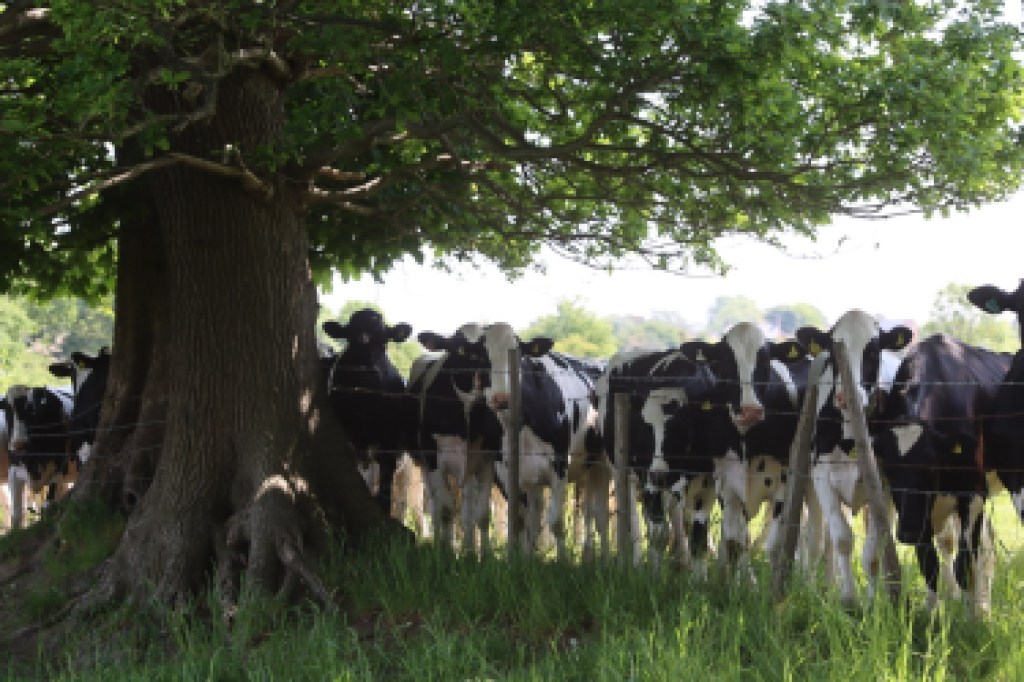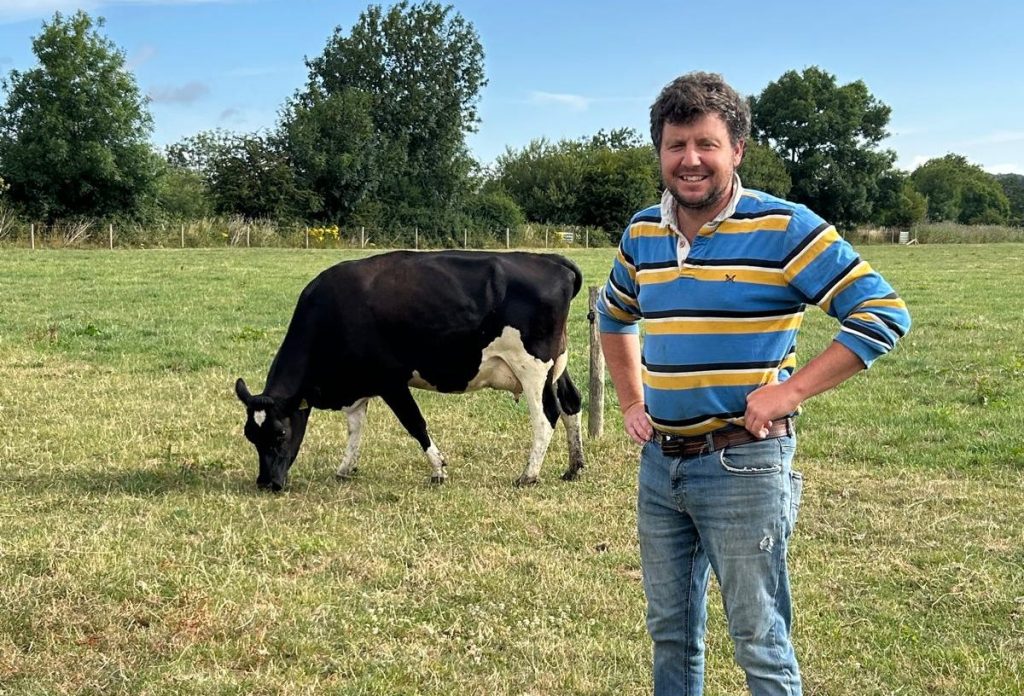
Based in Sturminster Marshall, Dorset, Ben Miller and his parents, Debbie and Gary manage a 150-cow spring-calving herd. For the past eight years, they’ve run a forage-focused system, breeding Irish grazing Friesians to suit their 10-week calving block from early February to April.
“We used to milk Jerseys for their solids,” Ben explains. “But after visiting Ireland, I could see herds there hitting the same milk quality while also being fertile and efficient off grass. That was the game-changer. We sold the Jerseys and brought in high-EBI Friesians – and we haven’t looked back.”
Cows are milked twice a day through a 20/40 direct-to-line parlour, with milk being supplied to First Milk. The family use Solnua exclusively to support a productive, grass based system. Solnua have four breeding systems available, based on a farm’s specific goals. Ben’s farm work within the parameters of a Solnua System 2.
Breeding goals
The aim is to maximise milk from grazed grass. “With good grass, they put it in the tank,” says Ben. Cows in the herd graze as much grass as the farm can grow between early February and mid-November. The remainder of their feed is supplemented with grass and maize silage, and the cows are fed between 800-1,000 kgs of concentrate in the parlour across a lactation.
For Ben, fertility is non-negotiable. “With Solnua, fertility is a given,” he says. Milk solids, particularly Fat and Protein percentages, and total kgs of milk produced are also important. On top of that, the family also select for physical traits like Chest Width, as well as Maintenance and beef figures within the EBI index, aiming to boost overall herd performance and financial returns. They select for a Maintenance figure between 17 and 22 and a mature cow weight between 500-550 kgs.
Results that deliver
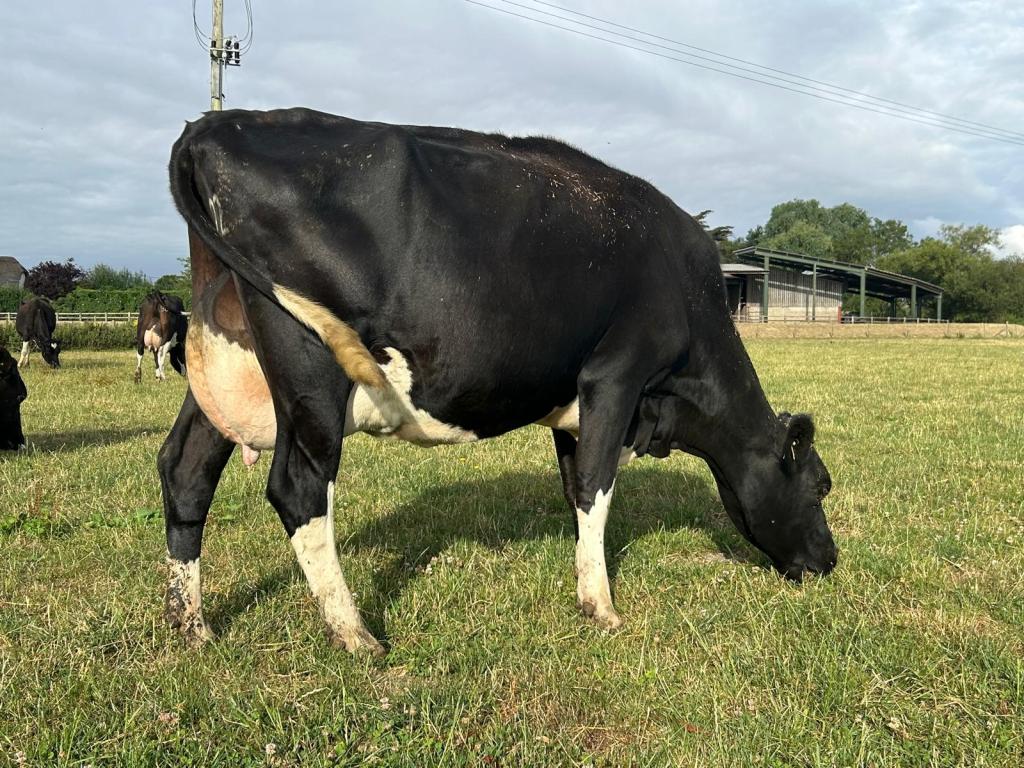
Milk yields are rising from a baseline of 5,234 litres per cow per lactation, with 3,318 litres, (between 70-73%), produced from forage. The farm has seen great results with Solnua genetics, with multiple mature cows in the herd achieving milk yields between 6,000-7,000 litres. Milk solids are rising, currently averaging 475 kgs per cow, at an impressive 5.03% Fat and 3.7% Protein. Ben commented that using Solnua has led to herd uniformity, allowing him to breed cows with good udders, legs and feet.
Cows in the herd suit a grazing system, handling the mile-long walk from the fields to the parlour with ease. As a result, the farm has had few issues with lameness.
The farm has seen excellent fertility results, with the herd’s conception rate sitting at 55% and just 10% of their cows were empty after the 10-week breeding period.
Improving beef calf quality
The switch to Irish grazing Friesians has also brought improvements in beef calf quality. All beef calves are currently sold to a rearer. Ben previously selected beef bulls based on gestation length and calving ease. With the plan to finish their own beef cross dairy animals in the future, Ben is now using NuEra Profit Max sires, such as Newpole Kowtow, Netherton Black Rain X970, NuEra T14 0142 and NuEra 0191, aiming for high growth rates and good finishing weights.
Through our exclusive partnership with Solnua, farmers across GB and Northern Ireland have access to genetics from the world’s largest Irish grass-based genomic breeding programme.
Talk to our team today to discuss how Solnua genetics can move your herd forward.